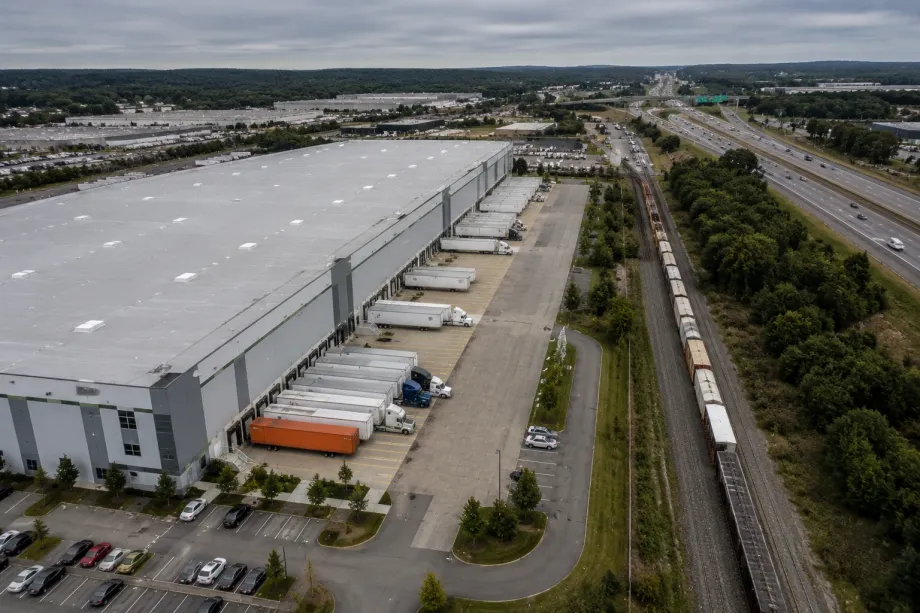
TL;DR: Massachusetts is a logistics hub for the Northeast because it gives businesses access to dense customer markets, major freight corridors, port and rail infrastructure, and regional warehouse networks. For companies managing eCommerce, retail, wholesale, or B2B distribution, Massachusetts offers a practical base for faster delivery and more controlled supply chain operations.
Why Massachusetts Is a Logistics Hub for the Northeast
Massachusetts plays an important role in how goods move throughout New England and the broader Northeast. For companies managing inventory, freight, fulfillment, and regional distribution, location has a direct impact on cost, delivery speed, and operational control.
The state gives businesses access to Boston, surrounding metro areas, major interstate corridors, port activity, rail connections, and a dense customer base across the Northeast. This combination makes Massachusetts a practical logistics hub for brands that need to move products efficiently without spreading inventory across too many locations.
For businesses evaluating regional 3PL support, working with a provider that understands Massachusetts warehousing services and Northeast distribution can simplify how products move from inbound freight to storage, fulfillment, and delivery.
What Makes Massachusetts a Logistics Hub?
A logistics hub is a location that supports the efficient movement, storage, and distribution of goods. It usually has strong transportation access, proximity to major markets, warehouse capacity, and regional freight infrastructure.
Massachusetts fits that definition because it sits at the center of New England commerce. Businesses can use warehouse space in Massachusetts to support customers across the state while also reaching nearby markets in Rhode Island, Connecticut, New Hampshire, Maine, Vermont, New York, and New Jersey.
This regional access is especially important for companies selling across multiple channels. eCommerce orders, wholesale shipments, retail replenishment, and B2B deliveries all depend on inventory being positioned close enough to customers to keep transportation efficient.
Access to Boston and Dense Northeast Markets
Boston is one of the most important commercial markets in the Northeast. It creates demand for warehousing, fulfillment, freight transportation, and regional distribution because businesses need to serve a high concentration of customers, retailers, institutions, and commercial buyers.
For companies that want to improve Northeast delivery performance, positioning inventory near Boston can reduce transit time and support faster outbound movement. Tighe’s Boston warehousing services are designed for businesses that need efficient storage, fulfillment, and distribution support throughout Greater Boston and New England.
The advantage is not just speed. A strong Massachusetts logistics strategy also helps businesses avoid unnecessary long-haul movements, reduce fragmented shipping processes, and keep inventory closer to where demand is highest.
Massachusetts Supports Regional Distribution Across New England
One reason Massachusetts works well as a logistics hub is that it can support both local and regional distribution. A company can use one well-positioned warehouse network to serve customers across several Northeast states instead of relying on disconnected storage locations.
That matters for companies that need consistent delivery coverage but do not want to overcomplicate their supply chain. From Massachusetts, inventory can move into Boston, Central Massachusetts, Western Massachusetts, Rhode Island, Connecticut, New Hampshire, Maine, and other Northeast markets through established freight routes.
Tighe’s warehousing services connect storage, inventory management, fulfillment, and outbound distribution, which helps businesses keep products moving without adding extra handoffs.
Warehouse Locations Create Flexibility
Logistics performance depends heavily on where inventory is stored. A single warehouse may work for some businesses, but growing brands often need flexible access to multiple facilities across a region.
Tighe’s Massachusetts warehouse network includes locations such as the Avon, MA warehouse and Winchester, MA warehouse. These facilities help businesses position inventory for storage, fulfillment, and distribution across New England.
This kind of regional footprint is valuable when order volume changes, seasonal demand increases, or customers require faster delivery. Instead of building new infrastructure internally, companies can use a 3PL network that already supports warehousing and distribution in the region.
Freight Infrastructure Supports Inbound and Outbound Movement
Massachusetts logistics is not just about warehouse space. Freight movement is equally important. Goods need to move into facilities efficiently, and outbound shipments need to reach customers, stores, distributors, or other facilities on schedule.
The state benefits from access to major highways, rail corridors, port infrastructure, and dense regional delivery routes. This supports multiple freight strategies, including truckload, less-than-truckload, intermodal, and regional transportation.
For larger shipments, truckload services can support direct freight movement between facilities or customers. For smaller shipments, LTL services help businesses move freight without requiring a full trailer. For longer-distance inbound freight, intermodal freight can connect rail and trucking to support more efficient movement into the region.
Why Massachusetts Matters for eCommerce and Omnichannel Brands
eCommerce and omnichannel brands need more than storage. They need inventory accuracy, order processing, packaging, fulfillment, and transportation to work together. When these functions are disconnected, delays and errors become more likely.
Massachusetts is well positioned for omnichannel distribution because brands can use regional warehouse space to support direct-to-consumer orders, retail replenishment, wholesale shipments, and marketplace fulfillment from one coordinated operation.
Tighe’s fulfillment services support this kind of multi-channel distribution by connecting order processing, picking, packing, shipping, and transportation within a broader logistics network.
Food, Beverage, CPG, and Industrial Brands Benefit from the Region
Massachusetts is also a strong logistics base for industries that require reliable handling and consistent distribution. Food and beverage companies, snack brands, consumer packaged goods companies, manufacturers, and industrial suppliers all benefit from being close to Northeast markets.
For these companies, logistics is not only about moving products. It is about maintaining inventory control, reducing delays, preparing products properly, and meeting customer or retail requirements.
Many brands also need additional preparation before products ship. Services like labeling, kitting, assembly, packaging, and retail preparation can support distribution across multiple channels. Tighe’s value-added services help businesses handle these needs within the warehouse workflow.
The Advantage of an Asset-Based Regional 3PL
Massachusetts works best as a logistics hub when businesses have the right 3PL partner managing the operation. A non-asset broker may be able to find capacity, but an asset-based regional provider has more direct control over warehouse operations, transportation assets, scheduling, and execution.
That control matters in New England, where delivery routes can be dense, seasonal demand can shift quickly, and freight timing often affects inventory availability. An integrated 3PL model helps reduce the number of disconnected providers involved in the supply chain.
Tighe Logistics combines warehouse space, transportation capabilities, fulfillment support, and regional expertise to help businesses manage distribution throughout Massachusetts and New England.
Why Massachusetts Will Remain a Northeast Logistics Hub
Massachusetts will continue to be a key logistics hub because it offers what regional supply chains need most: market access, transportation connectivity, warehouse capacity, and proximity to customers.
For businesses selling into New England, Massachusetts provides a strong base for inventory positioning and outbound distribution. For companies moving freight into the Northeast, it offers access to highways, rail, ports, and dense delivery networks. For eCommerce and omnichannel brands, it creates a practical way to improve delivery speed while maintaining operational control.
Companies evaluating a Northeast 3PL should look closely at how Massachusetts fits into their supply chain. With the right warehouse and transportation partner, the state can support faster distribution, better inventory visibility, and a more resilient regional logistics strategy.
To learn more, explore Tighe Logistics’ Massachusetts warehousing services, Boston warehousing services, and New England warehousing solutions.