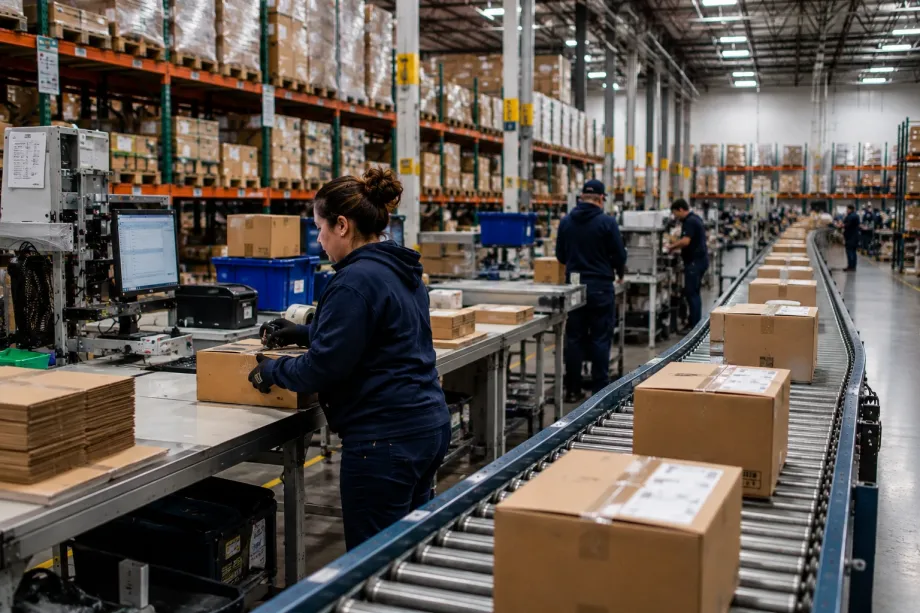
TL;DR: Omnichannel fulfillment helps brands manage inventory, orders, and shipping across eCommerce stores, online marketplaces, retail partners, and wholesale channels from a centralized operation. For companies selling throughout New England, working with an experienced regional 3PL can improve inventory visibility, simplify fulfillment, and reduce transit times across the Northeast.
Omnichannel Fulfillment 3PL in New England
Selling products through multiple channels has become the norm for growing brands. A company may sell through its own website, Amazon, retail stores, wholesale distributors, and specialty marketplaces simultaneously. While this creates new opportunities for growth, it also introduces significant operational complexity.
Inventory must remain accurate across every channel. Orders must be fulfilled according to different requirements. Retail shipments often have compliance standards that differ from eCommerce orders. Without a coordinated fulfillment strategy, brands can quickly find themselves managing disconnected systems and inefficient workflows.
This is where an omnichannel fulfillment 3PL becomes valuable. Rather than managing separate inventory pools and fulfillment processes for each sales channel, businesses can centralize operations through a single logistics partner that combines warehousing services, transportation, and fulfillment execution.
What Is Omnichannel Fulfillment?
Omnichannel fulfillment is the process of managing inventory and orders across multiple sales channels through a unified logistics operation.
Unlike traditional fulfillment models that often treat eCommerce, wholesale, and retail distribution separately, omnichannel fulfillment creates a centralized approach. Inventory is positioned strategically, orders are routed efficiently, and fulfillment processes remain consistent regardless of where an order originates.
For many brands, this means fewer inventory discrepancies, improved order accuracy, and greater visibility across the supply chain.
Why Omnichannel Fulfillment Matters for Growing Brands
Many businesses begin by managing fulfillment separately for each channel. The eCommerce inventory may be stored in one location while wholesale inventory is managed elsewhere. As order volume increases, this approach becomes increasingly difficult to maintain.
A centralized fulfillment strategy creates operational consistency by reducing duplication and improving inventory control through structured inventory management services.
Inventory Visibility Across Channels
One of the biggest challenges in omnichannel distribution is maintaining accurate inventory counts.
When inventory is allocated separately across channels, stockouts and overselling become more likely. A centralized fulfillment model provides a clearer view of inventory availability while supporting multiple order streams from a shared operation.
Consistent Customer Experience
Customers expect reliable delivery regardless of where they place an order. Whether products are purchased through a brand’s website, a marketplace, or a retail partner, fulfillment performance directly impacts customer satisfaction. A well-managed omnichannel operation helps maintain consistent service levels across every channel through streamlined order processing services and fulfillment workflows.
Why New England Is Well Positioned for Omnichannel Distribution
For companies serving customers throughout the Northeast, location plays an important role in fulfillment strategy.
New England provides access to some of the country’s most densely populated consumer markets. Inventory positioned within the region can often reach customers throughout Massachusetts, Connecticut, Rhode Island, New Hampshire, Vermont, Maine, New York, and parts of New Jersey within short transit windows.
This proximity reduces shipping costs while improving delivery speed.
Access to Major Population Centers
Boston serves as one of the largest economic centers in the Northeast. From a logistics perspective, the region offers efficient access to both urban and suburban markets across multiple states. For brands with a significant Northeast customer base, positioning inventory closer to end consumers can create meaningful operational advantages.
Strong Transportation Infrastructure
The New England region benefits from an established network of interstate highways, rail connections, ports, and distribution corridors. This infrastructure supports efficient movement of inventory from inbound freight through final delivery using a combination of intermodal freight, truckload transportation, and regional distribution services.
How a 3PL Supports Omnichannel Fulfillment
A third-party logistics provider acts as an operational extension of a brand’s supply chain. Rather than managing warehousing, inventory control, order processing, packaging, and transportation internally, companies can leverage an established logistics infrastructure designed to support growth.
Centralized Inventory Management
A 3PL provides a single inventory environment that supports multiple sales channels. This reduces the need to split inventory across locations while improving visibility and control. As order volume grows, centralized inventory management becomes increasingly important for maintaining fulfillment accuracy.
Order Processing and Fulfillment
Different channels often have different fulfillment requirements. Ecommerce orders may require direct-to-consumer packaging, while retail orders may require labeling, routing compliance, or pallet configuration standards. An experienced fulfillment operation can manage these varying requirements within a consistent workflow using integrated fulfillment services and operational controls.
Transportation Coordination
Fulfillment does not end when an order leaves the warehouse. Transportation planning plays a critical role in delivery performance. Coordinating fulfillment with truckload transportation, LTL shipping services, and intermodal transportation creates a more efficient end-to-end supply chain.
Industries That Benefit from Omnichannel Fulfillment
While omnichannel fulfillment is relevant across many sectors, certain industries often experience the greatest operational benefits. Food and beverage companies frequently manage retail distribution, wholesale accounts, and direct-to-consumer sales simultaneously. Consumer packaged goods brands often face similar complexity as they expand across channels. Many of these companies also utilize value-added services such as labeling, kitting, packaging modifications, and retail preparation to support multiple distribution channels. Manufacturers, subscription box companies, and specialty product brands also benefit from centralized fulfillment operations that support multiple sales environments. Businesses offering recurring shipments often combine omnichannel operations with subscription box fulfillment services to improve consistency and scalability.
Choosing an Omnichannel Fulfillment 3PL in New England
Not all fulfillment providers are structured to support true omnichannel operations.
Businesses evaluating a 3PL should consider the provider’s warehousing footprint, transportation capabilities, inventory management processes, and experience supporting multiple sales channels. For companies operating throughout New England, regional expertise can be particularly important. Understanding local transportation networks, delivery expectations, and distribution challenges helps create a more efficient supply chain.
A well-positioned New England 3PL can help brands simplify fulfillment operations, improve inventory visibility, and support long-term growth across eCommerce, retail, wholesale, and marketplace channels. Tighe’s network of strategically located facilities, including its Clinton warehouse, Avon warehouse, and Winchester warehouse, provides regional distribution coverage throughout the Northeast.
To learn more about omnichannel fulfillment strategies and regional logistics solutions, explore Tighe Logistics’ warehousing, fulfillment, and transportation capabilities across New England.